Goutweed: Invasive yet nutritious (if you can stomach it)
Goutweed (a.k.a., Bishop’s weed, ground elder, Snow-on-the-Mountain, English Masterwort, Herb Gerard, Gout Wort, Dog Elder, Ground Ash, Ashweed, White Ash, Goat's Foot, Bull Wort, Bishop Wort, Aegopodium podagraria) is a persistent bane of my existence as an ornamental perennial garden designer and builder.
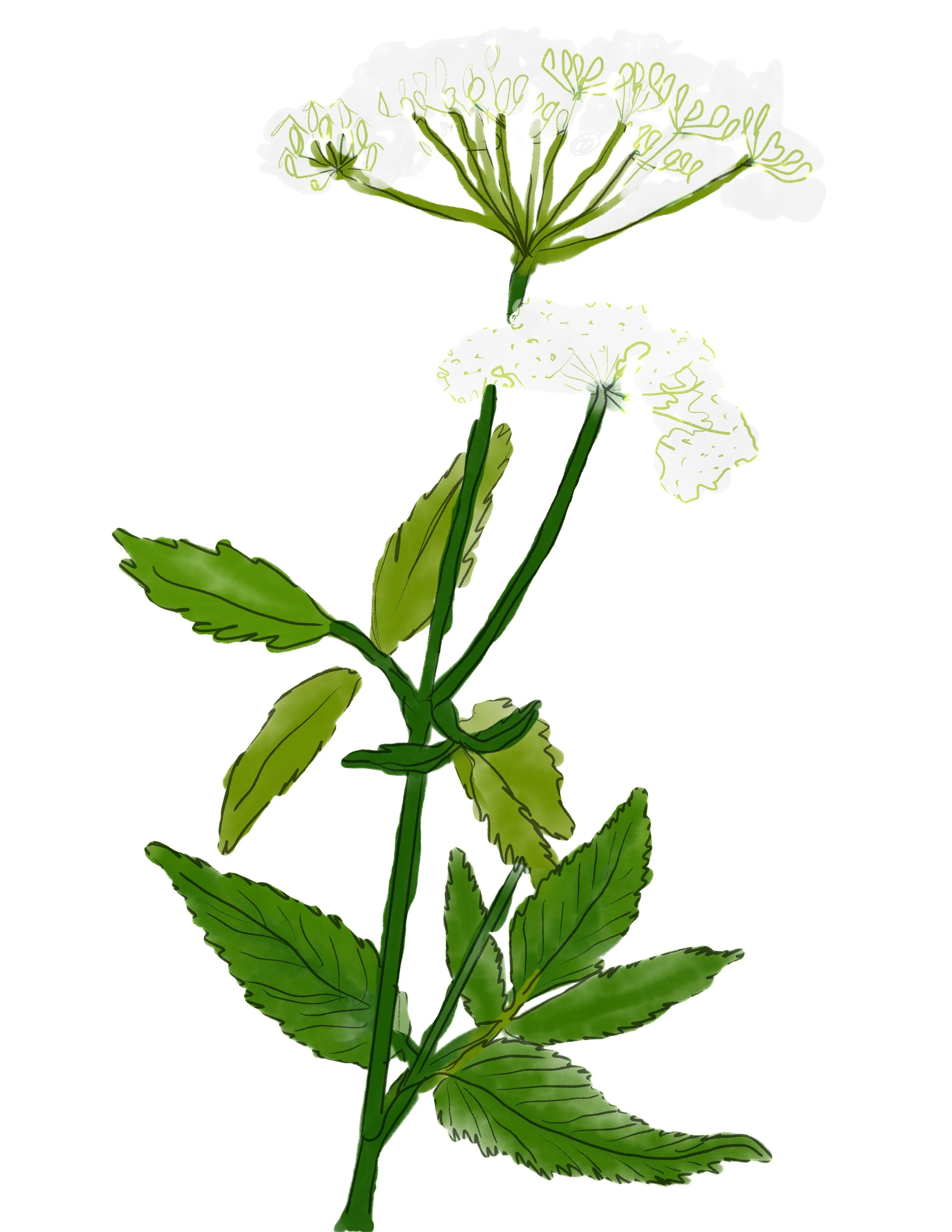
Goutweed in bloom.
Illustrated by Linda Pilgrim.
Oh sure, it looks sort of plain and nice, a bit like Queen Anne’s Lace in flower. Maybe this is why I find it in almost all of my garden clients’ perennial gardens? Goutweed (as I prefer to call it because apparently it was used long ago as a natural remedy for gout), is the number one invasive species that I find in people’s gardens in the US.
Why? Most people admit to bringing it into their garden on purpose!
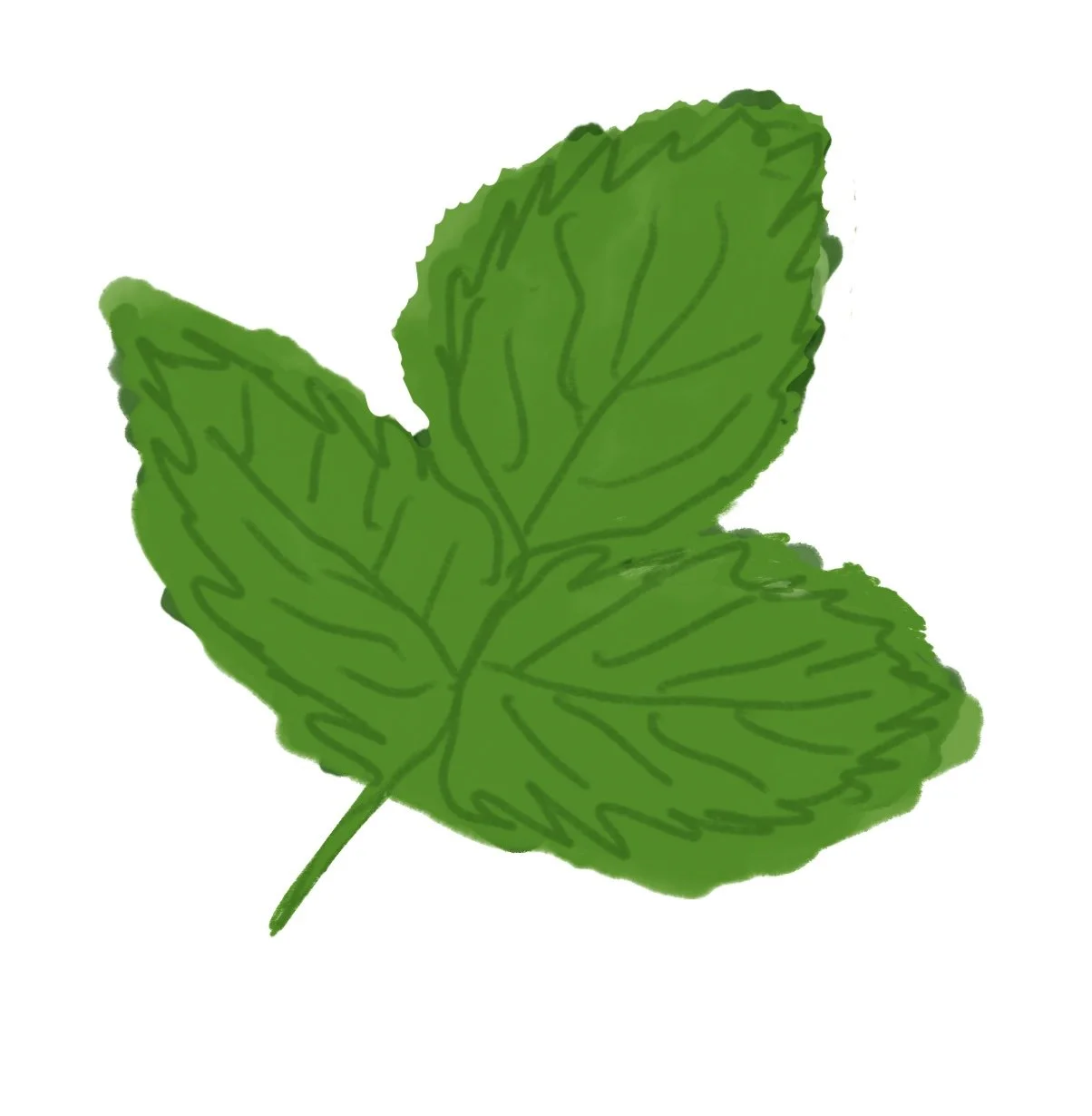
Green-leafed variety of goutweed.
Illustration by Linda Pilgrim.
Why do they do that? They tell me they found it on the edge of the woods or a friend gave it to them because it “looks nice,” and they noticed it spreads easily. So, they thought it would make a good ground cover. And, frankly, that’s a fair observation. Until, a few weeks or months or years later, they look to hire a garden designer/builder to ‘shape up’ their perennial gardens or design a new bed or “do a little weeding.” If they enlist me, I will tell them the hard truth: They have goutweed. It will eventually take over their garden, or worse, it will take over nearby vegetation, even woodlands—in sun or shade. Goutweed doesn’t care. And, that’s why it’s so awful (and banned in several states, although, strangely I have seen it for sale in New Jersey).
Compared to most plants that grow in the Northeast US, goutweed is tougher, stronger, and has few preferences about location, sun, shade, water, soil type, etc. Even worse, it’s very sneaky. Under the soil, it grows elaborate webs of rhizomes that allow it to spread far and wide, popping up from the soil wherever it feels like it; sometimes a few feet away from the nearest visible goutweed plant above ground.
So, how do you get rid of it?
The ‘groaner’ punchline among horticultural fans: MOVE (as in, sell your house and move far away).
If you like where you live and prefer to stay put, I’ll tell you the only way I have tried that will actually, ultimately succeed, but it could take a few years.

Variegated goutweed.
Illustration by Linda Pilgrim.
First, I’ll tell you what I have tried that does not work: smothering it with black plastic for several months in the heat or installing black landscaping fabric on top of it. Goutweed will happily grow through it. Once you discover it popping up, then you have to deal with the hole-ridden landscaping fabric and the goutweed.
Other people have tried chemicals. I have not. But, in theory, goutweed like many living things can evolve to become stronger than herbicides used against it. So, then you still have goutweed. Only then, it’s tougher.
Some people mow it or weed-whack it, sending it flying all even further from its current location. And, because it can regrow and reproduce from any part of itself, goutweed (in my experience) spreads even further and faster.
The one thing that I know works (and it takes a lot of work and time) is to sit down and get comfortable on the ground and start removing every single piece of the goutweed plant growing above-ground and underground. All of it. When you get down to the roots, follow them. Don’t break them or pull the plant from above. It will be back in a few days. You actually have to dig up and carefully pull out all parts, following the root through the soil and around the other plants in your garden that it has twisted itself around. Goutweed is very sneaky. One quality that will make following its rhizome roots easier, however, is it’s bright white color. Wipe off the dirt and compare it to most other plants nearby or tangled in it, goutweed’s rhizomes will appear much whiter, which is helpful for identification.
Then, each part of each goutweed plant needs to be put in a tough (preferably black) trash bag and thrown away with the garbage. Definitely do not compost it (or you probably will have to move). Don’t try to put it in the woods. It can take over shady woodlands too. Bag it up and throw it out with the trash.
Thank you for reading. Contact me if you have comments or questions.